 Blessy S
 Gothic science fiction is a genre that thrives in shadows. It fuses the eerie atmosphere and emotional intensity of horror literature with the speculative ideas and technological anxieties of science fiction. Rather than celebrating scientific progress or futuristic optimism, gothic sci-fi often questions it, portraying science as a source of dread, moral conflict, and existential fear.
This article offers a comprehensive guide to gothic science fiction books, tracing the genre’s origins, defining its key characteristics, exploring classic and modern works, and explaining why it remains deeply relevant in today’s technology-driven world.
Origins of Gothic Science Fiction
Gothic literature emerged in the late 18th century as a reaction against Enlightenment rationalism. Writers such as Horace Walpole, Ann Radcliffe, and later Edgar Allan Poe focused on emotion, terror, decay, and the supernatural. Gothic stories emphasised haunted spaces, psychological torment, and characters consumed by obsession or guilt.
These early works established themes that would later merge seamlessly with science fiction: fear of the unknown, the dangers of forbidden knowledge, and the fragility of the human mind.
The Birth of Science Fiction with Gothic Overtones
The convergence of gothic and science fiction can be traced to Mary Shelley’s Frankenstein (1818), widely regarded as the first true science fiction novel. Shelley replaced supernatural horror with scientific experimentation, transforming the gothic monster into a product of human intellect and ambition.
Unlike later science fiction that often celebrates discovery, Frankenstein portrays science as morally ambiguous and deeply unsettling. This foundational text established the core tension of gothic sci-fi novels: progress versus consequence.
Defining Characteristics of Gothic Science Fiction
Let’s look into the characteristics of gothic science fiction.
1. Atmosphere and Setting
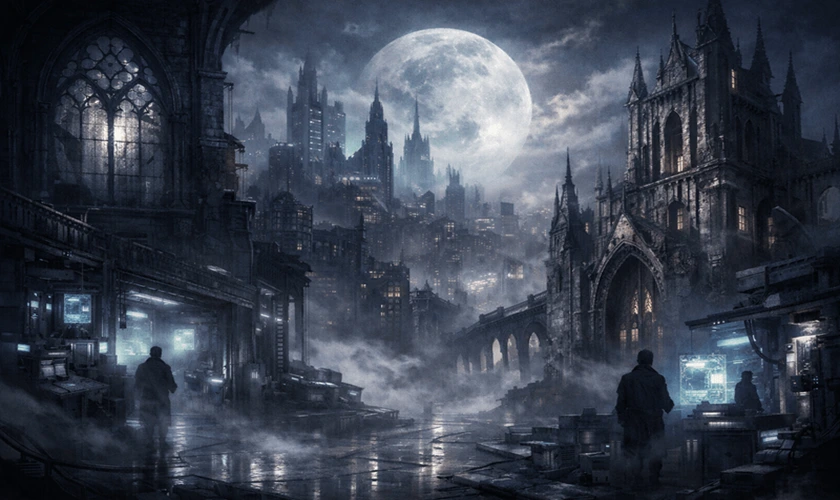
Setting plays a crucial role in gothic science fiction. These stories favour environments that evoke isolation and decay, such as
- Abandoned laboratories and research facilities
- Dying planets or ruined future cities
- Derelict spacecraft drifting through space
- Underground bunkers and sealed-off communities
Even when set in futuristic worlds, these spaces feel claustrophobic and haunted, reinforcing emotional and psychological tension.
2. Themes and Motifs
Gothic science fiction frequently explores:
- The ethical limits of scientific experimentation
- Fear of dehumanization through technology
- Obsession with immortality, control, or perfection
- Identity loss and fragmented consciousness
- Creation turning against creator
Rather than external monsters, the horror often arises from human choices and moral failures.
3. Gothic Protagonists and Anti-Heroes
Characters in gothic sci-fi books are rarely traditional heroes. Instead, they include:
- Tragic scientists burdened by guilt
- Isolated explorers confronting the unknown
- Artificial beings questioning their humanity
- Narrators plagued by doubt, memory loss, or madness
Their emotional depth and inner conflict are central to the genre’s impact.
Classic Gothic Science Fiction Books
Here is a list of top classic gothic science fiction books.
1. Frankenstein by Mary Shelley (1818)
Often considered the first science fiction novel, it tells the story of Victor Frankenstein, a scientist who creates life by animating a creature from assembled body parts. Gothic horror intertwines with themes of ambition, isolation, and the dangers of playing god.
2. The Strange Case of Dr Jekyll and Mr Hyde by Robert Louis Stevenson (1886)
This novella explores the duality of human nature through Dr. Jekyll, a respectable scientist, and his sinister alter ego, Mr. Hyde. Gothic elements, such as foggy London streets and moral corruption, blend with early psychological science fiction concepts.
3. The Island of Doctor Moreau by H.G. Wells (1896)
Dr. Moreau experiments on animals to transform them into human-like creatures on a remote island. The novel combines Gothic horror with speculative science, raising questions about ethics, evolution, and humanity.
Besides these, some of the popular classic gothic sci-fi books are:
- The Time Machine by H.G. Wells (1895)
- Dracula’s Guest & Dracula by Bram Stoker (1897)
- At the Mountains of Madness by H.P. Lovecraft (1936)
- The Coming Race by Edward Bulwer-Lytton (1871)
- The War of the Worlds by H.G. Wells (1898)
- The Invisible Man by H.G. Wells (1897)
- Flatland: A Romance of Many Dimensions by Edwin A. Abbott (1884)
Recommended: Beyond Dracula: Unearthing the Best Books of Bram Stoker
Modern Gothic Science Fiction Novels
Here is a list of modern gothic sci-fi novels.
1. Annihilation by Jeff VanderMeer (2014)
This novel exemplifies contemporary gothic science fiction through psychological horror and environmental mystery. The alien landscape of Area X defies scientific understanding, dissolving identity and logic. The true horror lies not in monsters, but in the erosion of self.
2. Never Let Me Go by Kazuo Ishiguro (2005)
This novel presents a quiet dystopia centred on cloning and organ harvesting. The restrained tone masks profound ethical horror, emphasising loss, inevitability, and emotional repression.
3. The Road by Cormac McCarthy (2006)
Though post-apocalyptic, the novel’s bleak atmosphere, moral despair, and existential dread align closely with gothic sci-fi traditions.
Apart from these, here is another list of modern gothic sci-fi books:
- Sorrowland by Rivers Solomon (2021)
- Chasm City by Alastair Reynolds (2001)
- Gideon the Ninth by Tamsyn Muir (2019)
- Awakened by Laura Elliott (2025)
- The Quiet by Barnaby Martin (2025)
- Immaculate Conception by Ling Ling Huang (2025)
- Esperance by Adam Oyebanji (2025)
Subgenres and Variations in Gothic Sci-Fi Novels
Gothic sci-fi novel is a versatile genre, and within it lies a fascinating spectrum of subgenres and stylistic variations that blend eerie atmospheres, speculative science, and psychological tension in unique ways.
1. Cyber Gothic Science Fiction
Cyber gothic blends cyberpunk technology with gothic despair. Themes include:
- Surveillance and loss of privacy
- Artificial intelligence as a threatening presence
- Human identity dissolving in digital worlds
2. Space Gothic
Space gothic emphasises cosmic isolation and dread. Vast emptiness replaces haunted mansions, while abandoned ships and alien ruins echo gothic architecture.
3. Biopunk and Body Horror
These stories focus on genetic manipulation, bodily transformation, and ethical collapse. Scientific advancement becomes a source of physical and psychological terror.
Symbols and Imagery in Gothic Science Fiction
In gothic sci-fi books, symbols and imagery serve as gateways to the uncanny, weaving together futuristic speculation and eerie atmospheres to explore the darkest corners of human experience and imagination. Common symbols include:
- Laboratories as modern castles
- Artificial beings as tragic monsters
- Mirrors and doubles representing fractured identity
- Darkness and decay symbolizing moral erosion
These images reinforce the genre’s philosophical depth.
Gothic Science Fiction vs. Traditional Science Fiction
While traditional science fiction often emphasises technology, exploration, and the possibilities of the future, gothic science fiction intertwines these elements with eerie atmospheres, psychological dread, and the uncanny, creating a fusion of speculative imagination and Gothic sensibilities.
Gothic Science Fiction | Traditional Science Fiction |
| Dark, melancholic tone | Optimistic or neutral tone |
| Focus on moral consequences | Focus on innovation |
| Psychological and emotional | Technical and exploratory |
| Fear of progress | Faith in progress |
Influence on Film, TV, and Popular Culture
Gothic sci-fi books have shaped numerous films and series, influencing visual aesthetics, storytelling techniques, and philosophical themes. Dark futurism, ethical dilemmas, and haunted technology are now staples of speculative media.
Conclusion
Gothic science fiction endures because it speaks to humanity’s deepest fears: loss of control, loss of identity, and the consequences of playing god. By merging the emotional darkness of horror literature with the speculative reach of science fiction, the genre offers profound insights into both our future and ourselves.
Recommended: The Impact of Science on Victorian Poetry